The bottom line Two published figures at a price where most listings publish none — modest, uncomplicated, and honest about what it is.
What is published
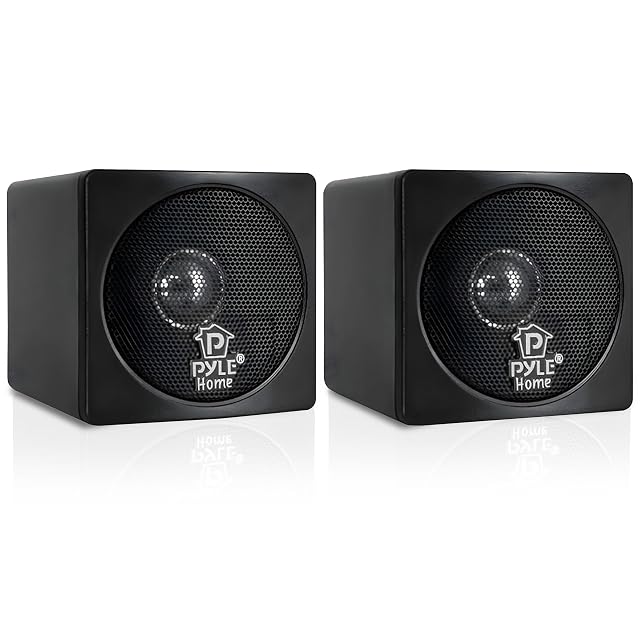
6 Ω and 40 Hz to 20 kHz, plus 2 × 30 W and a carbon fibre cone material. At this price, two of those four are more than most of the shelf offers.
How to read the frequency range
Without a tolerance, it tells you where output starts rather than where it is still usable. A rigorous specification carries a decibel reference — “45 Hz (−3 dB)” — and this one does not. It is still more informative than nothing.
The impedance
6 Ω is the easy answer. Any receiver or integrated amplifier drives it without question, which removes the compatibility issue that a 4 Ω speaker raises.
The power handling
30 W per channel is modest, and in practice it is rarely the limit: a compact speaker reaches its excursion limit before its thermal one. Where it matters is with a powerful amplifier played hard.
Where they belong
A small room, a desk, a second system, or the rear channels of a surround setup. Crossed over to a subwoofer, they will do more than the figures suggest.
Availability
On sale from 60 € to 70 € on the German, British, French, Italian and Spanish Amazon stores at the time of checking.
Not found on the American Amazon store, where the buy link falls back to a local search rather than to a page that does not exist.
Prices and availability are what Keepa reported on the date this page was updated; both move.
Prices quoted in this text were read on 4 September 2026. The live price is at the top of the page.
What we like, and what we don't
Strengths
Publishes impedance and a frequency range at the second-lowest price on this shelf
6 Ω is a straightforward load that any receiver handles
Carbon fibre cones named as the material rather than described in adjectives
Compromises
The 40 Hz figure has no stated tolerance, so it describes a range rather than a measurement
No sensitivity published
30 W per channel is a modest handling figure
Specifications
Power
2 × 30 W — stated
Impedance
6 Ω — stated
Frequency range
40 Hz to 20 kHz — stated, without a tolerance
Drivers
Carbon fibre dual drivers — stated
Sensitivity
Not stated in this listing
Amazon reference
B0FJSLM3LW (same reference on 5 Amazon marketplaces)
EAN
5056444113368
Questions people actually ask
Is 40 Hz believable from a compact speaker?
Not at full level, and without a tolerance the figure describes where output begins rather than where it is still useful. A specification like "45 Hz ±3 dB" would be a measurement; "40 Hz–20 kHz" is a range. This page reports it as published.
What does 6 Ω mean practically?
That any modern receiver or amplifier will drive them comfortably. It is the least demanding of the common impedances and it removes a compatibility question entirely.
2-way · 60 W RMS (120 W peak) · 4–8 Ω · 88 dB sensitivity · 110 mm woofer-mid, 13 mm tweeter
The only bookshelf speaker in this catalogue that publishes RMS power, impedance range AND sensitivity — the three figures that decide whether an amplifier suits it.
Best for: Anyone matching speakers to an amplifier on published figures rather than on brand.