The bottom line The system built for the job rather than adapted to it: RF transmission, a charging base and television speakers that keep working.
Why the transmission is the whole product
Everything else about television headphones follows from it. Digital RF is a dedicated radio link built for low latency and range; Bluetooth is a general-purpose protocol adapted to the task. The consequences are lip sync, walls, and whether the television keeps its own sound.
The range figure
100 metres, stated, through walls. That means the kitchen, the garden and the next room — which is what people actually do with television headphones, and what Bluetooth does not support.
The base station
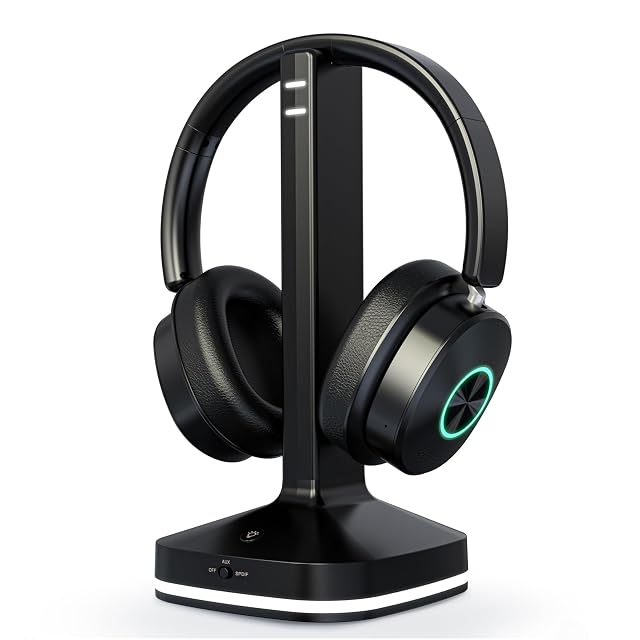
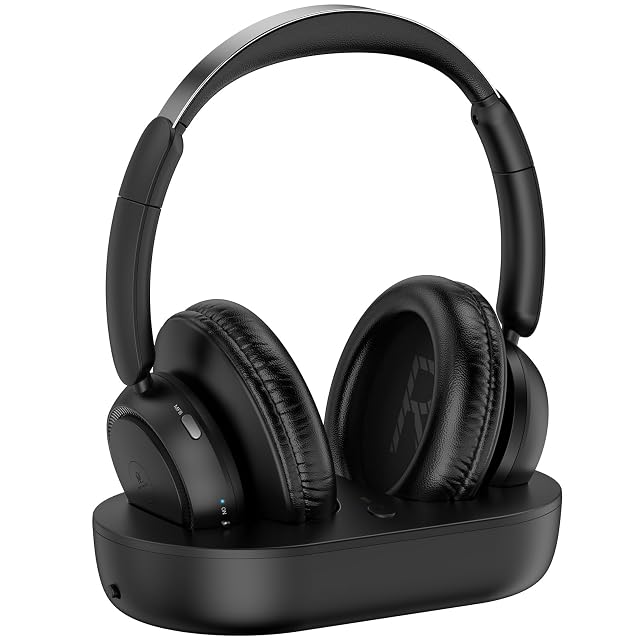
It takes an audio output from the television and charges the headphones when they are docked. Both matter: the first keeps the television speakers alive for anyone else in the room, the second means the headphones are never flat when wanted.
What is not stated
A latency figure. It is the specification that defines this category, and Sennheiser publishes it on the maker’s own sheet rather than in this listing.
The modes
Bass boost and surround. The second is processing rather than real surround, and on headphones it is a matter of taste. The one worth looking for on any television headphone is speech enhancement, which is what sells the category.
Availability
On sale from 159 € to 188 € on the German and French Amazon stores at the time of checking.
Listed but with no offer on the British, Italian and Spanish Amazon stores — the reference exists there and nobody is currently selling it.
Not found on the American Amazon store, where the buy link falls back to a local search rather than to a page that does not exist.
Prices and availability are what Keepa reported on the date this page was updated; both move.
Prices quoted in this text were read on 4 September 2026. The live price is at the top of the page.
What we like, and what we don't
Strengths
Dedicated RF rather than Bluetooth — the transmission built for low latency and range
A 100-metre stated range that works through walls, unlike Bluetooth
A base station that also charges, so the headphones are always ready
The television speakers keep working, because the base station takes an audio output rather than pairing
Compromises
No latency figure stated, on the specification that defines the category
A base station needs a socket and a shelf near the television
The most expensive headphones here
Specifications
Transmission
Digital RF — stated, not Bluetooth
Range
Up to 100 metres — stated
Modes
Bass boost and surround sound modes — stated
Base station
Included, also charges the headphones
Latency
Not stated as a figure in this listing
Amazon reference
DE B07XTW93RV · GB B00SBC130U · FR B07XTW93RV · IT B00SBC130U · ES B00SBC130U
EAN
4044155248890
Questions people actually ask
Why RF instead of Bluetooth?
Latency and range. Lips and voices separate visibly above roughly 40 ms; ordinary Bluetooth ranges from 200 ms down to about 40 with a low-latency codec, and only when both ends support it. Dedicated RF is built for the job and works through walls, which Bluetooth largely does not.
Do the TV speakers still work?
Yes, because the base station takes an audio output rather than pairing as a Bluetooth device. That is the practical difference when two people are watching and only one needs headphones — several televisions mute themselves when a Bluetooth device connects.