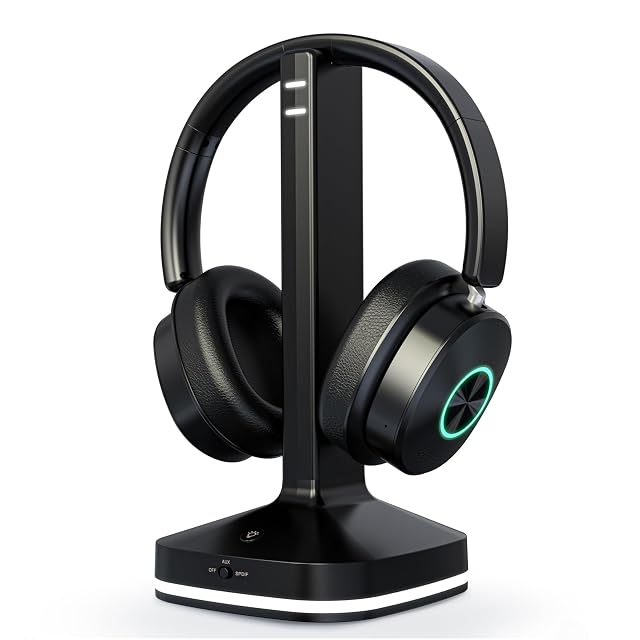
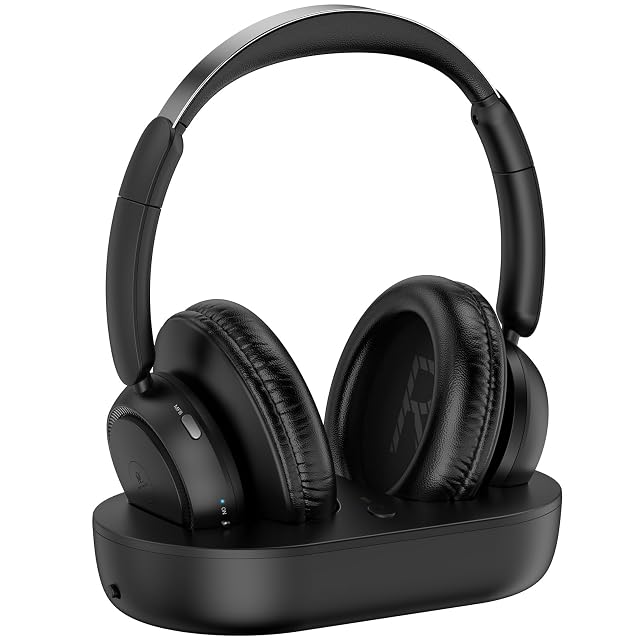
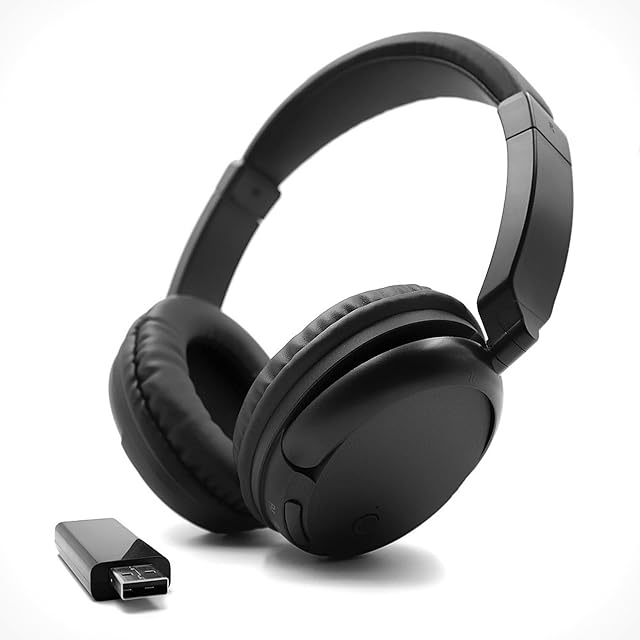
The bottom line The bypass output is the reason to choose it: private listening that does not silence the room.
The feature that decides it
A bypass output. The transmitter takes the television’s audio and passes it on as well as broadcasting it. That means the room keeps its sound while one person listens privately — which is the actual situation most television headphones are bought for, and which a Bluetooth connection usually prevents by muting the television.
Why 2.4 GHz rather than Bluetooth
A dedicated link built for latency rather than a general protocol built for compatibility. It does not depend on both ends supporting a low-latency codec, which is the most common way Bluetooth disappoints here.
The inputs
TOSLINK optical and AUX. Optical is the one most televisions still have, and it avoids the pairing and format questions entirely.
In-ear rather than over-ear
Lighter, cooler over a long evening, and less isolating. If the point is to not hear the room, over-ear is better; if the point is to hear the television clearly without disturbing anyone, in-ear is comfortable for longer.
What is not stated
A latency figure. It is the specification this category turns on, and no listing here publishes one.
Availability
On sale at around 82 € on the German Amazon store at the time of checking.
Listed but with no offer on the French, Italian and Spanish Amazon stores — the reference exists there and nobody is currently selling it.
Not found on the American and British Amazon stores, where the buy link falls back to a local search rather than to a page that does not exist.
Prices and availability are what Keepa reported on the date this page was updated; both move.
Prices quoted in this text were read on 4 September 2026. The live price is at the top of the page.
What we like, and what we don't
Strengths
A bypass output, so the television speakers keep working while the earphones are in use
Optical input, which most televisions still have and which avoids any pairing question
2.4 GHz rather than Bluetooth, which generally means lower latency
In-ear rather than over-ear, which suits warm rooms and long evenings
Compromises
No latency figure stated
In-ear designs isolate less than closed over-ear ones, which matters if the point is not hearing the room
A transmitter box needs a socket near the television
Specifications
Transmission
2.4 GHz — stated, not Bluetooth
Form
In-ear — stated
Inputs
TOSLINK optical and AUX — stated
Bypass
Audio bypass output — stated
Charging
Transmitter doubles as a charging box — stated
Amazon reference
B0H7BXLC85 (same reference on 4 Amazon marketplaces)
EAN
4022107485746
Questions people actually ask
What is the bypass output for?
It passes the audio on to the television speakers or a soundbar while the transmitter also sends it to the earphones. That means one person can listen privately without silencing the room, which is the situation this product is actually bought for.
Is 2.4 GHz better than Bluetooth?
For this job, generally yes. A dedicated 2.4 GHz link is designed for low latency rather than for broad compatibility, and it does not depend on codec support at both ends the way Bluetooth does.