Skip to content

Mounting a television, and what the rating does not cover

Choosing a television mount is two decisions that get confused: which movement you need, and whether your wall can take it. The first is a matter of the room; the second is a matter of what is behind the plaster, and no product specification answers it. This guide covers the first and points firmly at where the second is answered.

Fixed, if the seating is in front of the screen

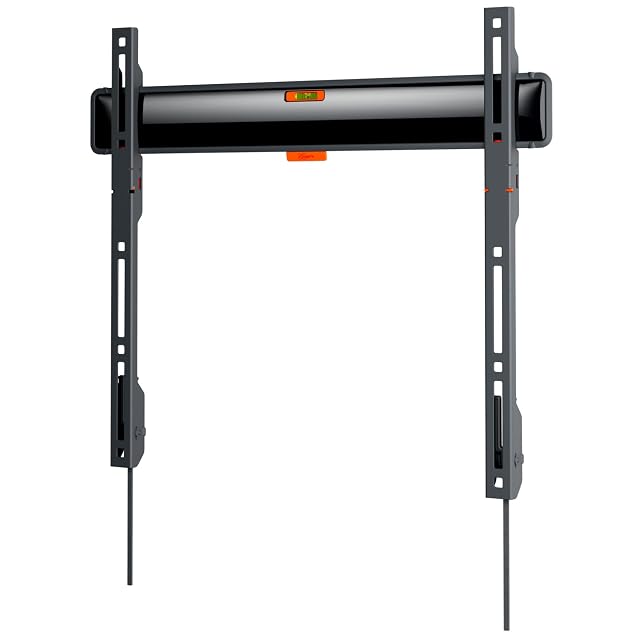
The Vogel’s TVM 5605 sits ultra-flat against the wall with nothing to sag. Check the wall gap: a screen flat against a wall leaves no room for a stiff HDMI plug, and plugging in everything you will ever need before hanging it is the advice people wish they had taken.

Full-motion, if the screen has to be seen from the side

The Perlegear articulating mount extends and swivels. Understand the trade: at full extension an arm multiplies the leverage on its anchors compared with the same screen held flat, which is why the fixing matters more here than anywhere else on this site.

A floor stand, if the wall is not an option

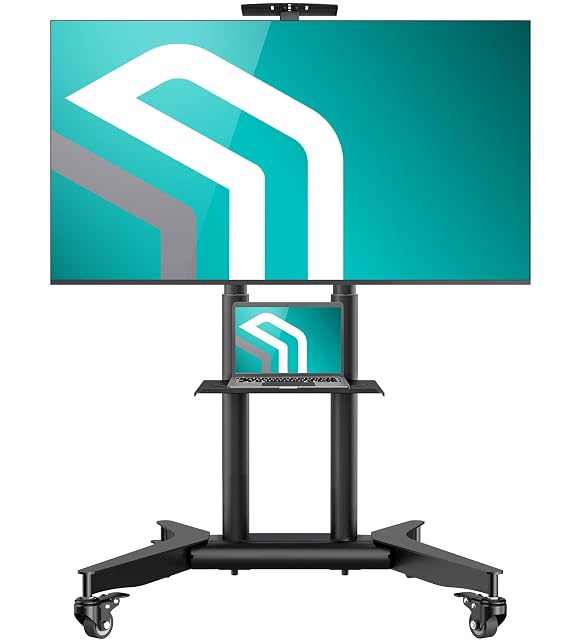
The ONKRON rolling stand carries the screen without touching the wall. Weigh the base rather than the screen — the stands that tip are the ones with a small footprint and a light foot, and both figures are published.

And the bar underneath

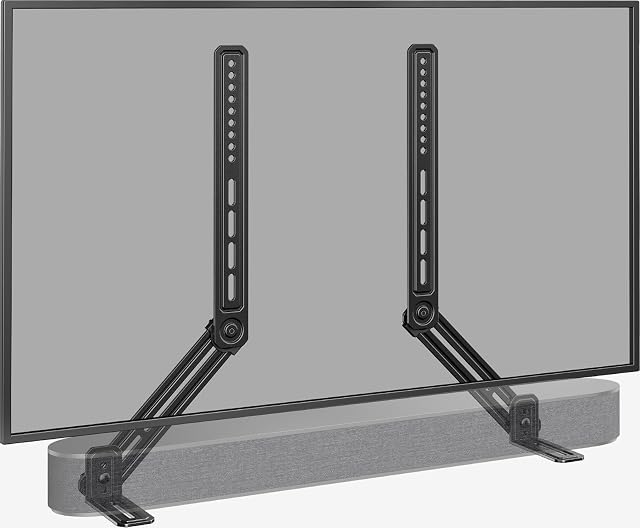
The Perlegear soundbar mount puts the bar below the screen without covering the infrared window, which is what a bar on a shelf usually does.

Where this guide stops

At the anchor. Which fixing, at what spacing, in what material is answered by the mount’s instructions and the anchor manufacturer’s ratings, and this is the one subject on this site where getting it wrong is not a question of picture quality.

What we recommend, and why

  1. Vogel's Comfort TVM 3405 fixed flat TV wall mount, 32–77"

    32–77" · VESA up to 400×400 · 50 kg stated load · 22 mm wall gap · ClickLoc single-click lock · dedicated cable access · AR installation app

    A 22 mm gap with a single-click lock and a deliberate cable access channel — the fixed mount that thought about what happens after installation.

    Best for: An installation that will be lived with — where cables change and the set occasionally comes off.

    ≈ $50 / £39 / 35 €
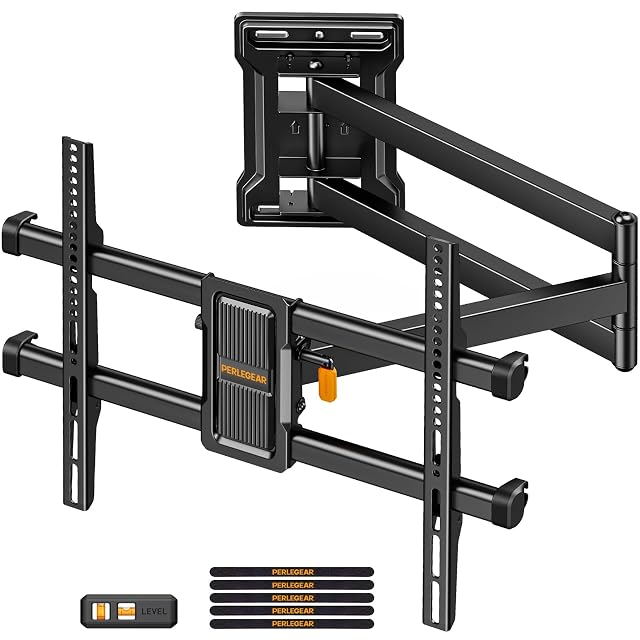
  2. Perlegear PGMF24B full-motion TV wall mount, 32–65"

    32–65" (81–165 cm) · VESA from 200×100 to 200×200 and wider · 60 kg stated load · tilt −15° to +5°, two adjusters · swivel ±90° · single-joint arm, 30% thicker

    A stated 60 kg on a single arm with two separate tilt adjusters — the heaviest capacity on this shelf outside the premium bracket.

    Best for: A heavy mid-to-large set that needs to swing out, on a wall that has been properly identified.

    ≈ £40 / 42 €

  3. ONKRON TS1571-B mobile TV stand on castors, 32–75"

    32–75" · VESA 200×200 to 600×400 · 50 kg stated load · height 1065–1415 mm · rubberised locking castors · steel shelf to 5 kg · webcam shelf

    The only stand here that publishes its height range and its VESA limits — 1065 to 1415 mm, and patterns up to 600×400.

    Best for: A large screen used at a set working height — a meeting room, a studio, a treadmill in front of a television.

    ≈ $135 / £130 / 140 €

  4. Perlegear PGSM04B soundbar mount for above or below a TV

    VESA-attached, above or below the screen · 6.8 kg stated load · removable long extension plates and L-brackets · tool-free knobs, 360° rotation, extending arms · maker states an existing TV wall mount must be removed and refitted with this

    Tool-free knobs and 360° rotation, above or below the screen — with a maker's note about what has to be dismantled first.

    Best for: A wall-mounted television being installed now, with the soundbar fitted at the same time.

    ≈ £20 / 24 €

Questions people actually ask

How do I know if my wall will hold it?

Establish what is behind the board first — solid masonry, timber studs, metal studs or dot-and-dab — then follow the mount's own instructions for that material. Most kits supply masonry fixings only, and a plasterboard partition needs something else entirely.

What if I cannot drill at all?

A floor stand. It puts the load on the floor, needs no fixing, is height-adjustable in a way no wall mount is, and in a rented flat it is the correct answer rather than a compromise.

Can I mount onto plasterboard?

Not into the board alone. You must fix into the studs or another structural element, and finding them is most of the job.

How high should it go?

Eye level when seated, not standing. Mounting above a fireplace looks tidy and is genuinely uncomfortable to watch.

What do I need to check first?

The wall construction and whether cables or pipes run behind it. A detector costs very little compared to the consequences.

Does the mount pattern matter?

Yes. Televisions use standard hole patterns, and the bracket must match yours. Check before buying.

Are articulated arms riskier?

They multiply the load on the fixings when extended. Rate everything for the extended position, not the resting one.

When should I get someone in?

When you are unsure what the wall is made of. A falling television is a serious accident rather than an inconvenience.

The tool we use ourselves

Chosen your machine? Now buy it at the right price.

Projectors, soundbars and receivers swing by fifty euros or more across the year, and the biggest "discounts" often land at prices the same model sold for six weeks earlier. UniverTrack tracks the real price history across retailers, spots fake reductions, and alerts you when it is genuinely the moment to buy.

Real price historyBuy-now alertsAI buying assistant
Try free for 14 days →
No commitment · Cancel in one click · 5 languages