Getting started
A first home cinema, in the order it earns its place
A home cinema needs far less than a catalogue suggests, and the order in which it is assembled changes the result more than the total spent. Sound first, because a flat panel's own speakers are the weakest part of any system. Then the screen or the projector, then the parts that make either usable. The list below is that order.
By Jean-Benoit Buisson
Four purchases, and the order is the argument.
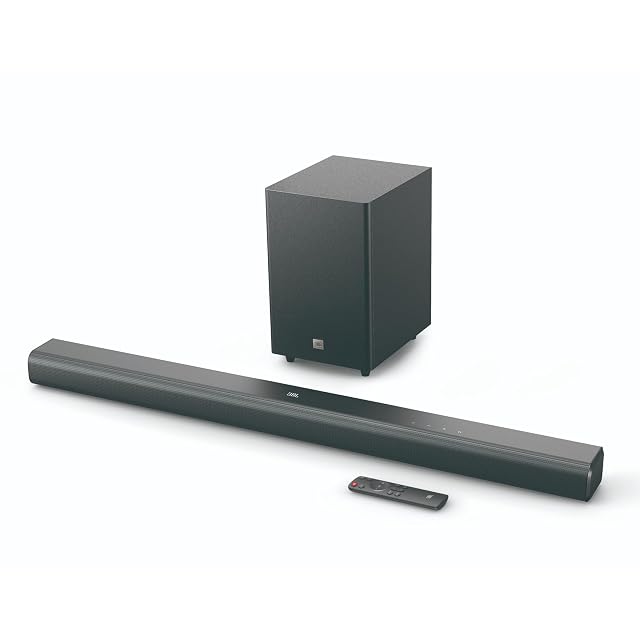
1. A soundbar with a centre channel
The JBL Cinema SB 550 is a 3.1 bar with a built-in subwoofer: the third channel is the one that carries dialogue, and dialogue is the complaint people actually have about flat-panel sound. A 3.1 bar answers it for less than a 5.1 system costs.
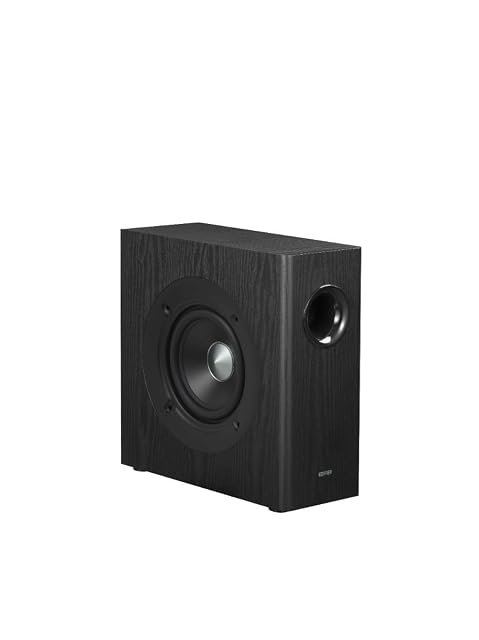
2. A subwoofer, when the bar has taken you as far as it goes
The Edifier T5s relieves the bar of the work it is worst at, and the result is a system that sounds cleaner at volume rather than merely deeper. Position it before upgrading it — a metre of movement changes its output at your seat more than a better model would.
3. The projector, if the room can control its light
The Acer H6815BD is a 4K UHD machine with a stated ANSI figure, which at this price is itself informative: most of the shelf quotes an unqualified “lumens” number that is measured to nothing. Check the throw ratio against your room before anything else.
4. The screen, which is not optional once you project
The celexon fixed frame is a tensioned fabric on a rigid frame — the flattest surface money buys — with the black border that sharpens the edge of the image. A screen bought after the projector can be matched to it; one bought before is a bet on where the light will come from.
What is deliberately not on this list
A receiver, surround speakers and height channels. All three are worth having and none of them is the first purchase, because none of them addresses what a new system gets most wrong.
Questions people actually ask
Why does sound come before the picture?
Because it is further from good. A television or projector is a fully engineered image; its built-in speakers are an afterthought constrained by a thin chassis or a small box. The gap between that and a bar with a centre channel is larger than the gap between two generations of display.
Can I skip the screen and use a wall?
To start, yes, and it is the sensible way to find out whether the position and the size work. What a screen adds is uniformity, a controlled surface and a black border that absorbs overspill — and that border is the cheapest visible improvement in a projected system.
Do I need a receiver for this?
Not for this list. A soundbar and a subwoofer connect over one HDMI cable. A receiver becomes the right answer when speakers go in real positions around the room, which is the next system rather than this one.
Where should I spend first?
On sound. Most people notice poor sound faster than an average picture, and a soundbar changes daily viewing more than a screen upgrade.
Do I need a projector?
Only if you can control the light. In a bright room a television will look better than any projector, whatever its specification says.
How big a screen?
Sized to your seating distance. Too large at close range is uncomfortable, and that is a common and expensive mistake.
What about neighbours?
Bass travels through walls more than anything else. In a flat that shapes what you buy and how you set it up.
What do people forget?
Cable routing. It decides where equipment can physically live, and finding that out after buying is expensive.
Can I build it gradually?
That is usually the best approach: sound, then light control, then the display. Each step makes the next one worth more.