Skip to content

A first projector without the fantasy numbers

This is the shelf where an unqualified "lumen" figure is at its worst: a machine that genuinely produces a few hundred ANSI lumens is routinely advertised at twenty thousand. That does not make these projectors bad — several are perfectly good in a dark room on a modest image. It makes the listings unreliable, and this guide is about reading them.

What to read on any of these

The unit on the brightness figure. A machine stating “1 300 ANSI” has told you something; one stating “20 000 lumens” has not. Where a maker states ANSI or ISO anywhere in the listing — often in the specification table rather than the headline — that is the number to compare.

The three, and what separates them

The WiMiUS states an ANSI figure, which at this price puts it in a minority. The Aurzen leads on its built-in applications, which is a licensing question worth checking service by service. The Red Mito is the portable option: a battery, a smaller image, and a machine that goes in a bag.

The purchase that is not optional

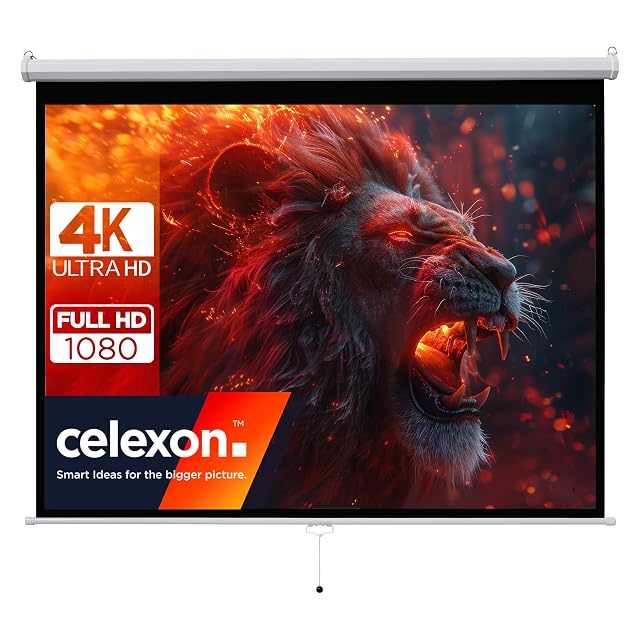
A surface. The celexon pull-down screen costs a fraction of the projector and improves the picture more than the next tier of machine would — flatness, uniformity and a black border that the wall does not have.

What to spend more on, if you can

Light output, not resolution. At a two-metre image watched from three metres, native 4K over good 1080p is a smaller difference than brightness and contrast make, and at this end of the market the money buys more of the second.

What we recommend, and why

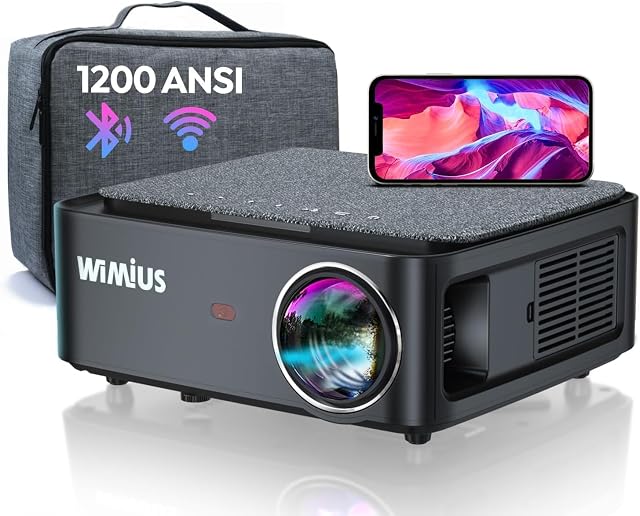
  1. WiMiUS K1 Full HD projector, 1 200 ANSI lumens

    Full HD 1080p · 1 200 ANSI lumens · 4K signal accepted · 5G Wi-Fi · Bluetooth · up to 300-inch image

    A 1080p projector that states 1 200 ANSI lumens — a measured unit at a price where the shelf usually does not — and that accepts a 4K signal without displaying one.

    Best for: A first projector in a room that can be darkened, for someone who wants a large image without a large budget.

    ≈ 133 €

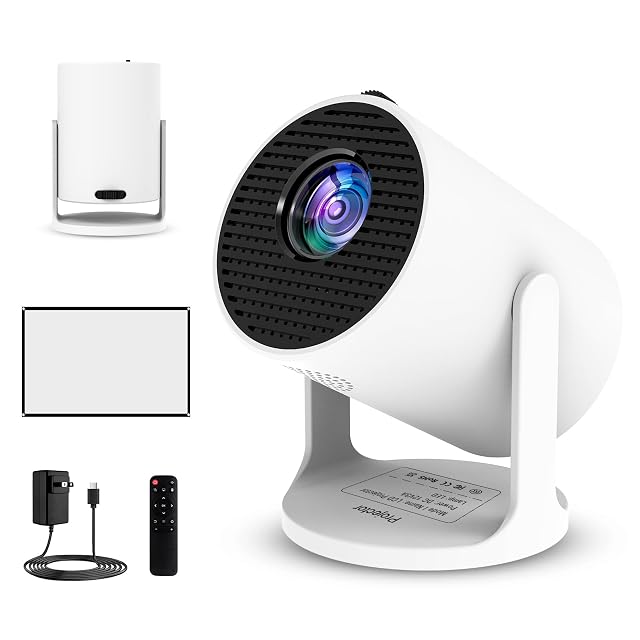
  2. Aurzen EAZZE D1 smart projector, 1080p

    Native 1080p · Netflix and Dolby support stated · smart system built in

    A compact 1080p projector sold on its built-in applications rather than on its optics — which makes the licensing question, not the brightness figure, the thing to check.

    Best for: A second room or an occasional setup, where a self-contained machine matters more than a comparable specification.

    ≈ $100 / £95 / 120 €

Questions people actually ask

What should I realistically expect?

A good image in a dark room on a two-metre width, and a disappointing one in daylight. That is the honest boundary of this price tier, and no listing states it.

Do the built-in apps work properly?

It depends on licensing rather than hardware, and it is worth checking on the maker's own page before buying: several machines cannot run one major streaming service at full resolution. Nothing on the box says so.

Will a projector work in my living room?

Only if you can control the light. Ambient light defeats projectors more thoroughly than any specification compensates for.

What should I measure first?

Throw distance: how far back the projector must sit for the image size you want. A room that is too shallow rules out some models entirely.

Does fan noise matter?

In quiet scenes it becomes the loudest thing in the room, and it cannot be fixed after purchase. It is worth checking.

What are the ongoing costs?

Lamps and filters on many models. Check that consumables are available for the model before you commit to it.

Ceiling or table?

Ceiling is tidier and a bigger installation; a table is flexible and gets knocked. Each changes cabling and the correction needed.

Is a projector better than a television?

In a darkened room, for films, it gives scale a television cannot. In a bright room the television wins easily.

The tool we use ourselves

Chosen your machine? Now buy it at the right price.

Projectors, soundbars and receivers swing by fifty euros or more across the year, and the biggest "discounts" often land at prices the same model sold for six weeks earlier. UniverTrack tracks the real price history across retailers, spots fake reductions, and alerts you when it is genuinely the moment to buy.

Real price historyBuy-now alertsAI buying assistant
Try free for 14 days →
No commitment · Cancel in one click · 5 languages