What the maker puts in writing
- “This 2.0-channel, 60W max soundbar enhances audio for movies and shows… Adjust treble and bass with the remote”
- “Use the EQ button on the remote to switch between Music, Movie, Voice, and Stadium modes”
- “Fully compatible with any Roku TV. This soundbar connects via HDMI ARC, enabling control of both your TV and soundbar with just one remote”
- “Easily pair the soundbar with your devices via Bluetooth 5.3, connect through Aux-in or a USB device, or enjoy a home theater experience using optical input or HDMI ARC”
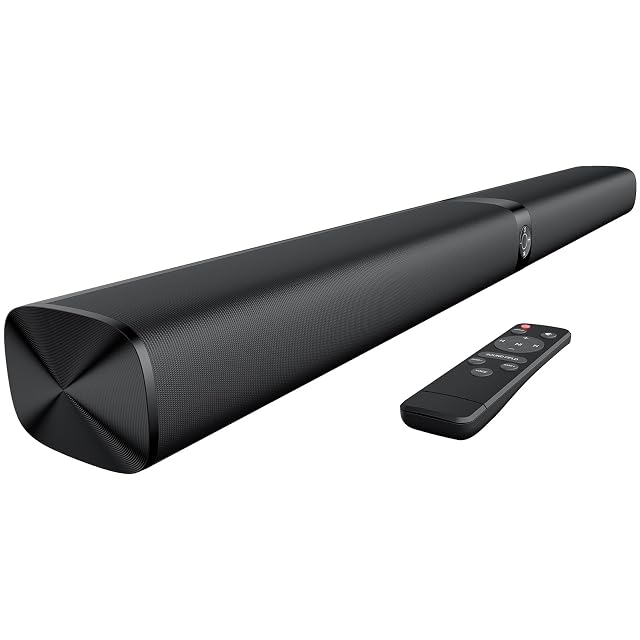
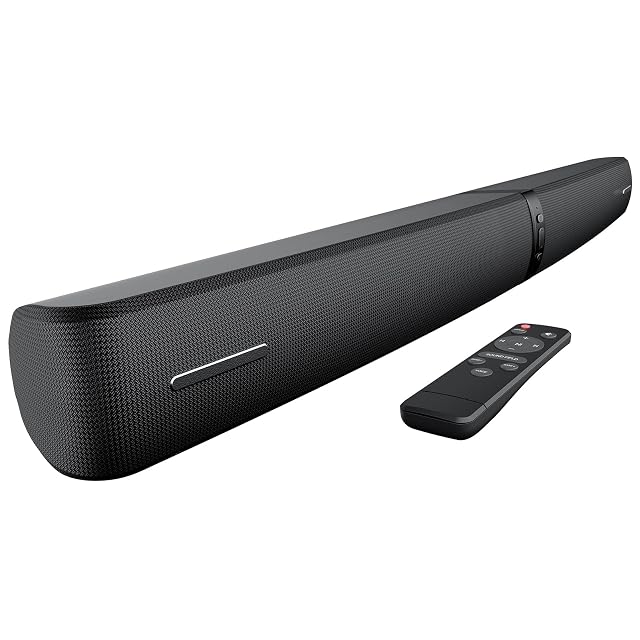
- “Made with a metal grille, this soundbar has a unique slanted and low-profile design. It includes wall brackets for versatile placement”
The Philips ladder inverts here, and this is where it inverts
B4000 — $75.10 — 2.0 · 60 W · BT 5.4
B5109 — $77.99 — 2.0 · 120 W · Dolby Digital Plus · DTS Virtual:X · BT 5.4 · Night Mode · app
B4208 — $117.38 — 2.0 · 60 W · no Dolby · no DTS · BT 5.3
B5306 — $117.94 — 2.1 + wireless subwoofer · 140 W
Thirty-nine dollars and thirty-nine cents more than the B5109, for half the power, neither surround format and older Bluetooth.
So the audio case for this bar does not exist. The case that does is physical.
What the money actually buys
A metal grille, where most bars at this price use fabric over plastic. It is more robust and it does not sag or stain.
A slanted low-profile body, which on a shelf in front of a television matters: a bar angled upward fires toward a seated listener instead of at their knees, and a low profile avoids blocking the screen’s bottom edge or an infrared receiver.
Integrated wall brackets. The mounting points are in the chassis, not a separate purchase. Bose at $279 states the opposite outright: “wall brackets sold separately”. Sony supplies only a paper template.
And 1,100 mm of length — the longest bar on this shelf, against 810 mm for the Suntrok, 800 for the Hisense, 766 for the B5109 and 594 for the Bose. On a 65-inch television that proportion looks right; on a narrow unit it will overhang, which is part of why the wall brackets are there.
Four equaliser modes
Music, Movie, Voice, and Stadium, plus treble and bass from the remote.
Three of the four Philips bars here have the same set, and the Hisense has six. The B4000 at $75.10 has none stated.
Voice is the one that earns its place — dialogue intelligibility is the commonest complaint about television sound, and four bars on this shelf address it by name.
Sixty watts, and the shelf-wide caveat
Every power figure here but one is a maximum — a momentary ceiling, not a sustained level.
Only the Majority Sierra publishes RMS: 120 W continuous, which makes it genuinely more powerful than the “240 W peak” claims on the Hisense and the Suntrok.
And the inversion worth remembering: Sony, Amazon and Bose publish no wattage at all, and nobody calls them quiet.
What is not published
No Dolby and no DTS, at a hundred and seventeen dollars — where the B5109 at $77.99 has both.
No weight, where the B5109 gives 1,928 g and the B4000 2,200 g.
No driver count and no driver size. None of the four Philips bars publishes either; Suntrok gives diameters and Bose names its drivers.
No subwoofer — and Philips’s own B5306, fifty-six cents dearer, includes a wireless one.
Availability
At the check, the American Amazon store stood at roughly $115.
These numbers are what Keepa carried on the day this page was last built. Stock and prices move without notice.
Prices quoted in this text were read on 4 October 2026. The live price is at the top of the page.
What gets asked most
Why does this cost more than the B5109?
The listings give no technical reason, and the figures favor the cheaper bar on every audio line. This B4208 at $117.38: 2.0 channel, 60 W max, no Dolby, no DTS, four EQ modes, HDMI ARC plus AUX plus USB plus optical, Bluetooth 5.3, metal grille, slanted body, integrated wall brackets. The B5109 at $77.99: 2.0 channel, 120 W max, Dolby Digital Plus, DTS Virtual:X, four EQ modes, the same four inputs, Bluetooth 5.4 with LE Audio, a Night Mode and a Philips app. So $39.39 more buys half the power, neither surround format and older Bluetooth. What it does buy is the body: a metal grille, a "unique slanted and low-profile design", integrated wall brackets, and 1,100 mm (43.3 in) of length — the longest bar on this shelf, which suits a wide television or a long unit.
Do integrated wall brackets matter?
They remove a purchase and a guess, and on this shelf that is not universal. Philips states "it includes wall brackets for versatile placement, allowing you to place it on a TV stand, mount it on the wall, or set it on any flat surface" — so the mounting points are part of the chassis rather than an accessory. Compare the top of this shelf: Bose at $279 says plainly "mounted to a wall (wall brackets sold separately)". Sony at $98 supplies a wall mount template — a paper drilling guide — which is thoughtful but still needs the hardware. Suntrok includes two wall screws. On a bar 1,100 mm (43.3 in) long and 67 mm (2.64 in) deep, a wall mount is also the placement that makes most sense, since that length will overhang many television stands.
Is 60 watts enough for a living room?
For television at normal levels, generally yes — and the figure is less informative than it looks. Every power number on this shelf except one is a maximum: a momentary ceiling, not a level the amplifier sustains. Only the Majority Sierra publishes RMS, at 120 W continuous, which makes it the one comparable figure here and a genuinely more powerful bar than the "240 W peak" claims from Hisense and Suntrok. What actually decides perceived loudness and quality in a 2.0 bar is driver size and cabinet volume, and none of the four Philips bars publishes either. Note too that the three best-known brands on this shelf — Sony, Amazon and Bose — publish no wattage whatsoever, and nobody suggests they are quiet.