What the maker puts in writing
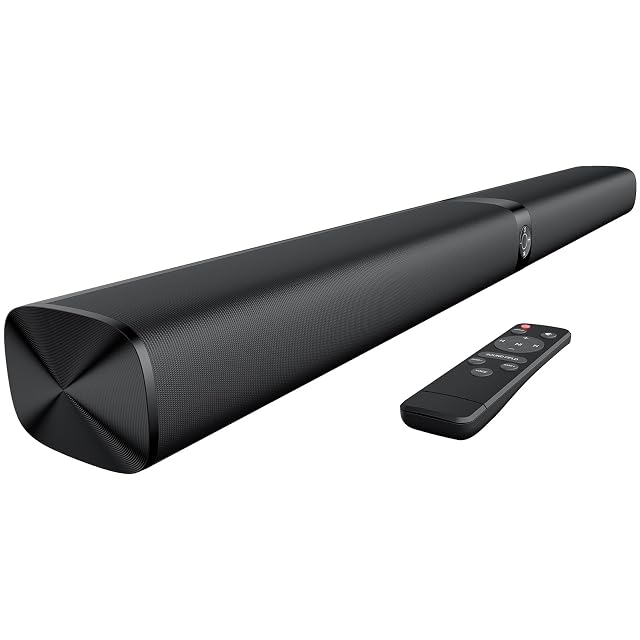
- “4 placing ways, 4 sound feels. Standing Tabletop: Stereo sound + Natural voice… Wall Mount: Heavy rumble for movie & game fun. Flat Tabletop: Balanced mid + Silky tone… Wall Mount: Clean bass + Sparkling treble”
- “90W delivers Balanced bass + Clear crisp mid + Sparkling bright treble… Each volume press jumps 3 levels”
- “Movie mode – Bold depth + Clear tone. Music mode – Lively vocal + Full melody. News mode – Natural speaking. 3 ready-to-use EQ presets”
- “Important check before you buy: 1) Your TV must have ARC / OPT / AUX ports. 2) Use the dedicated ARC port, not regular HDMI. 3) Read full manual before first installation”
- “Quick tip: Turn off Dolby or DTS audio in both your TV settings and the streaming app to ensure stable, clear audio output”
It is the only listing here that tells you what will go wrong
Two warnings, both correct, both absent from the other eleven listings on this shelf.
“Use the dedicated ARC port, not regular HDMI.” A television has three or four HDMI inputs and only one carries ARC — the Audio Return Channel, which sends sound out of the television back down the cable. It is marked “HDMI ARC” or “eARC” in small print beside the socket. Plug a soundbar into any other HDMI port and nothing happens, because ordinary inputs only receive.
“Turn off Dolby or DTS audio in both your TV settings and the streaming app.” Over ARC a television can send stereo PCM or a compressed bitstream. A bar that cannot decode the bitstream gets a stream it does not understand, and you get silence, static or dropouts.
Between them, those two paragraphs cover the great majority of soundbars that arrive and appear broken.
But the second warning is also an admission
If Dolby and DTS must be switched off, the bar decodes neither.
Which is fine at sixty dollars, and worth knowing against the alternative. Philips’s B5109 at $77.99 — eighteen dollars more — decodes Dolby Digital Plus and DTS Virtual:X, and publishes double the power.
Four placements, three positions
Standing Tabletop… Wall Mount… Flat Tabletop… Wall Mount.
Wall mounting is listed twice out of four, with two different sound descriptions and nothing said about what separates them.
The same slip is on its stablemate the KY-8000, which counts “horizontal” and “tabletop” as two of its four.
What is genuinely true underneath: a bar lying flat and a bar standing on edge do aim their drivers differently, and that honestly deserves two settings.
Ninety watts, and the number to distrust on this shelf
Ten of the twelve bars here publish a maximum or peak. This is one.
Only the Majority Sierra publishes RMS — 120 W continuous. Which means 120 W RMS is the more powerful bar than a “240 W peak” one, despite reading half as loud.
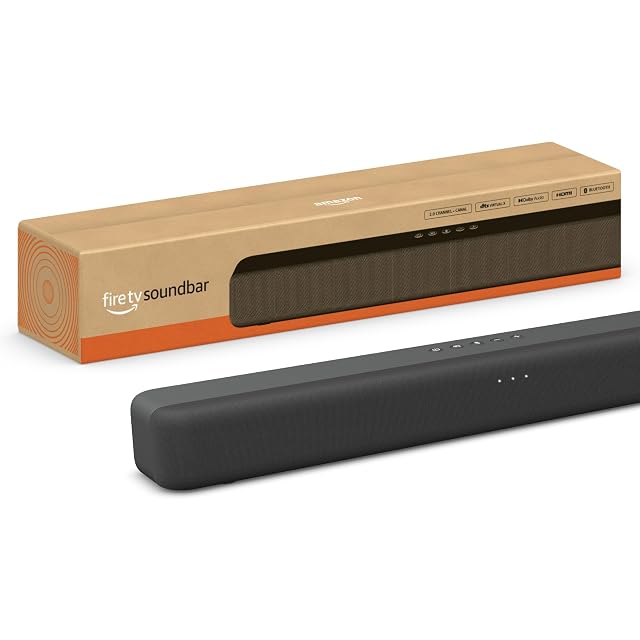
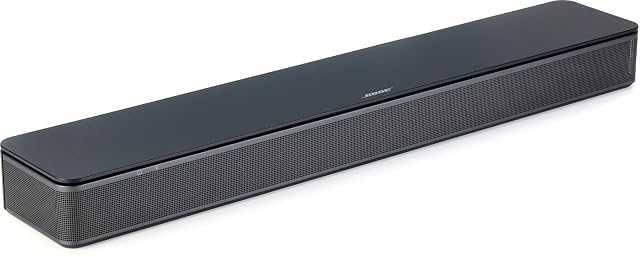
And Sony, Amazon and Bose publish no wattage at all.
What is not published
No subwoofer, so nothing below roughly 100 Hz. Hisense at $119.99 includes a wireless one; Suntrok at $81.21 a wired one.
No weight, and no driver count or size — where its own stablemate the KY-8000 states four drivers, and Suntrok publishes actual diameters (two 2.5-inch plus a 5.5-inch subwoofer).
No HDMI cable stated in the box, where Amazon, Hisense, Majority and Suntrok all include one.
Availability
At the check, the American Amazon store stood at roughly $60.
These numbers are what Keepa carried on the day this page was last built. Stock and prices move without notice.
Prices quoted in this text were read on 4 October 2026. The live price is at the top of the page.