Skip to content

Majority Sierra review

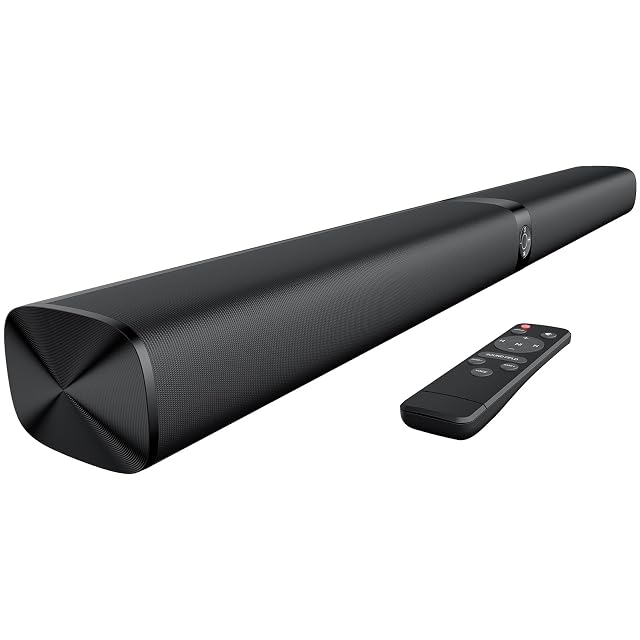
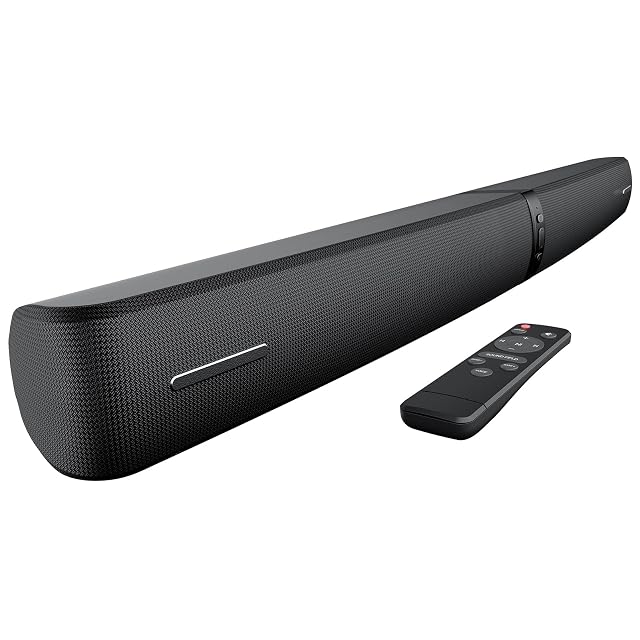
A 2.0.2 Dolby Atmos soundbar at 120 W RMS with dual HDMI inputs and 4K HDR pass-through.

The closing call The only RMS figure on this shelf, the only Atmos, the only height channels and the only dual HDMI inputs — and its catalog dimensions lose the bar’s entire length while its weight is exactly right.

What the maker puts in writing

  • “Upgrade your TV audio with 120W RMS power, 2.0.2 channel sound, and Dolby Atmos support”
  • “Connect TVs, consoles, or media players through HDMI ARC or dual HDMI inputs, with 4K HDR pass-through”
  • “Stream playlists from your phone, tablet, or laptop up to 8 meters (26 ft) away” via “Bluetooth 5.0”
  • “Pick Movie, Music, News, or 3D, then adjust bass and treble from the remote”
  • “Includes Sierra sound bar, remote, power cable, HDMI cable, RCA to 3.5mm (0.14 in) AUX cable, wall mount kit, and manual, with 37.8 x 4.25 x 3.19 inches dimensions and 7.83 lbs”

One hundred and twenty watts RMS — the only comparable number here

This is the most useful thing on the shelf, and it reads like the weakest.

An RMS rating is continuous: power the amplifier can sustain. A maximum or peak rating is a momentary ceiling, measured generously and often with no distortion limit stated.

As a rough industry pattern, peak figures run two to four times the continuous figure for the same hardware.

So against the shelf:

Hisense: 240 W max · Suntrok: 240 W peak · Philips: 60, 120, 140 W max · Assistrust: 80 and 90 W · this: 120 W RMS · Sony, Amazon, Bose: nothing

Ten peaks, one continuous figure, three silences. The 120 W here is very probably the most powerful bar on the shelf, and it is certainly the only figure you can reason about.

And the only third number

A channel count reads front . sub . height. 2.0.2 is two front channels, no subwoofer, and two up-firing height drivers.

That third number is the only thing separating genuine Dolby Atmos playback from processed simulation — and no other bar on this shelf has one. Everything else is 2.0 or 2.1, so the DTS Virtual:X and “3D audio” claims elsewhere here are psychoacoustic processing with nothing aimed at the ceiling.

Where the limit sits: up-firing drivers work by bouncing sound off the ceiling, so the effect depends on your ceiling being flat, hard and at a sensible height. A sloped or acoustic-tiled ceiling degrades it considerably.

Dual HDMI inputs, which nothing else here offers

Connect TVs, consoles, or media players through HDMI ARC or dual HDMI inputs, with 4K HDR pass-through.

Every other bar on this shelf is ARC only — meaning every source plugs into the television, and the television sends audio back down one cable. That works, and it makes the TV the switcher.

Inputs on the bar let a console or a player route through it, which matters for two reasons: the bar receives the full uncompressed audio stream rather than whatever the television chooses to send back, and you free up a television input.

The 4K HDR pass-through is the necessary companion — without it, routing video through the bar would cost you resolution or dynamic range.

The catalog loses the length; the weight proves it

Catalog: 81 × 108 × 81 mm — a cube the size of a mug.

Its own bullet: 37.8 × 4.25 × 3.19 inches and 7.83 lbs — that is 960 × 108 × 81 mm.

So two of the three catalog figures are right and the 960 mm (37.8 in) length has become 81, a repeat of the depth.

And the weight settles it: 7.83 lb is 3,552 g (125.3 oz), exactly the catalog weight.

Which makes this the only listing on this shelf to publish both its dimensions and its weight in its own text. Bose publishes dimensions — including its remote’s — and no weight for the bar. Sony, Amazon and the four Philips bars publish neither.

What it does not have

No subwoofer. And that is the real trade at this price: Hisense at $119.99 and the Philips B5306 at $117.94 both include a wireless one, for twenty dollars less than this.

So the choice is explicit. Height channels and Atmos and two HDMI inputs here, or bass there. For most rooms and most films, a subwoofer is the more audible purchase — a bar 81 mm (3.19 in) deep cannot move air below about 100 Hz, and that is where the weight of a film mix lives.

Bluetooth 5.0, the oldest on this shelf, against 5.4 on two Philips bars. Less important than it sounds, since television audio goes over HDMI.

No driver count and no driver size, where Suntrok publishes diameters.

Availability

At the check, the American Amazon store stood at roughly $140.

These numbers are what Keepa carried on the day this page was last built. Stock and prices move without notice.

Prices quoted in this text were read on 4 October 2026. The live price is at the top of the page.
In its favor, and against it

Strengths

  • The only RMS power figure on this shelf, which makes it the only number here you can compare
  • Two genuine height channels and real Dolby Atmos, which nothing else here offers
  • Dual HDMI inputs with 4K HDR pass-through, so a console routes through the bar rather than the TV

Compromises

  • No subwoofer, where Hisense and the Philips B5306 include a wireless one for twenty dollars less
  • Its catalog dimensions give an 8 cm (3.1 in) cube — the bar’s length has dropped out
  • Bluetooth 5.0, the oldest on this shelf, and no driver sizes published

Specifications

Channels2.0.2 — the only THIRD NUMBER on this shelf: two height channels
Power120 W RMS — the only continuous rating on this shelf
Why RMS mattersAn RMS figure is sustained; the other ten here are momentary peaks
FormatDolby Atmos — the only one here
HDMIARC plus DUAL HDMI INPUTS — the only inputs on this shelf
Pass-through4K HDR
Equaliser4 modes: Movie, Music, News, 3D, with bass and treble from the remote
Bluetooth5.0, stated to 8 meters (26 ft)
In the boxSoundbar, remote, power cable, HDMI cable, RCA-to-3.5 mm (0.20 in) AUX cable, WALL MOUNT KIT, manual
Published size37.8 × 4.25 × 3.19 in and 7.83 lb, in its own bullet
Catalog dimensions81 × 108 × 81 mm (3.19 × 4.25 × 3.19 in) — the length is missing, see the FAQ
Weight3552 g (125.3 oz) — exactly the 7.83 lb it publishes
SubwooferNone
Driver count or sizeNot published
Amazon referenceB0GMLFGBPJ
EAN5056444114747

What gets asked most

Why is 120 W RMS better than 240 W peak?

Because they measure different things, and this is the single most useful fact on the shelf. An RMS rating is continuous: power the amplifier can sustain indefinitely without overheating or distorting. A maximum or peak rating is a momentary ceiling, usually measured generously, frequently with no distortion limit stated at all. As a rough industry pattern, peak figures run two to four times the continuous figure for the same hardware — so a bar advertising "240 W peak" may be delivering somewhere near 60 to 120 W continuously. Ten of the twelve bars on this shelf publish max or peak: Philips 60, 120 and 140 W, Assistrust 80 and 90 W, Hisense 240 W max, Suntrok 240 W peak. This is the only RMS figure. And Sony, Amazon and Bose publish nothing at all.

What does the third number in 2.0.2 mean?

Two real height channels, and it is the only bar on this shelf that has any. A channel count reads front.sub.height, so 2.0.2 is two front channels, no subwoofer, and two up-firing height drivers. That third number is the only thing that distinguishes genuine Dolby Atmos playback from processed simulation. Everything else here is 2.0 or 2.1 — no third number — so bars that mention DTS Virtual:X or "3D audio" are producing the effect psychoacoustically, with nothing aimed at the ceiling. Worth knowing where the limit sits even so: up-firing drivers work by bouncing sound off the ceiling, so the effect depends on your ceiling being flat, hard and at a sensible height. A sloped or acoustic-tiled ceiling degrades it considerably.

Can it be an 8 centimeter cube?

No — the catalog has dropped the length, and the listing itself supplies the right figures. The catalog gives 81 × 108 × 81 mm (3.19 × 4.25 × 3.19 in), which would be a cube the size of a mug. Majority’s own final bullet publishes "37.8 x 4.25 x 3.19 inches dimensions and 7.83 lbs" — that is 960 × 108 × 81 mm (37.8 × 4.25 × 3.19 in), so two of the three catalog numbers are correct and the 960 mm (37.8 in) length has become 81, a repeat of the depth. And the weight settles it: 7.83 lb is 3,552 g (125.3 oz), exactly the catalog weight. So trust the bullet. It also makes this the only listing on this shelf that publishes both its dimensions and its weight in its own text — Bose publishes dimensions, including its remote’s, and no weight for the bar.

Against the home cinema devices in the same bracket

Between home cinema devices of the same category and nearby price. Shown: what they all state. A half-filled column says nothing.

Model Price ChannelsWeightSubwoofer
Majority Sierra $140 2.0.2 — the only THIRD NUMBER on this shelf: two height channels3552 g (125.3 oz) — exactly the 7.83 lb it publishesNone
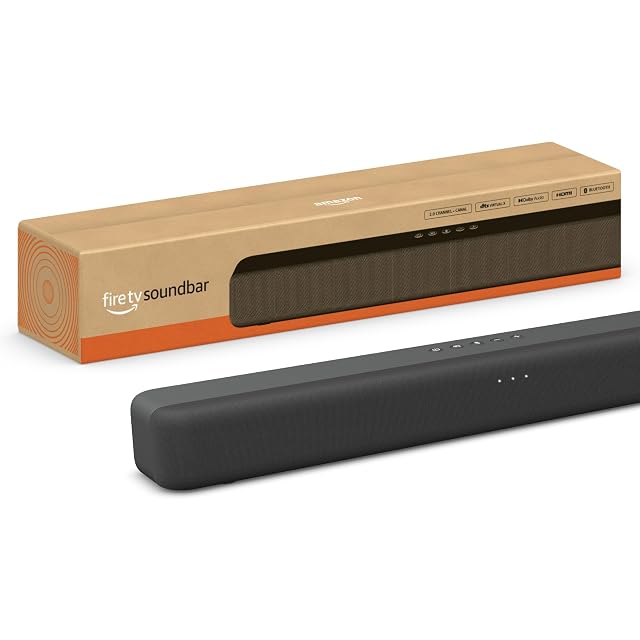
Amazon Fire TV Soundbar $120 2.0 — dual speakers, no subwoofer1801 g (63.5 oz)None, and none offered as an add-on
Philips B5306 (TAB5306/37) $120 2.1 — stereo plus a wireless subwooferNot publishedWireless — so it can be placed where the bass works
Hisense HS2100 $115 2.1 — two front-facing speakers plus a wireless subwoofer2223 g (78.4 oz)Wireless — so it can go where the bass works

What the models do not share, in home cinema devices

  • If price decides: Hisense HS2100, at $115.

Who should pick this one, among home cinema devices

A console and a television through one bar — and the only honest wattage here

Sources

Specifications: the manufacturer sheet for home cinema gear and the matching Amazon product page. Prices and availability: Keepa. Every figure on this page names its source.

The method applied to these home cinema devices