Skip to content

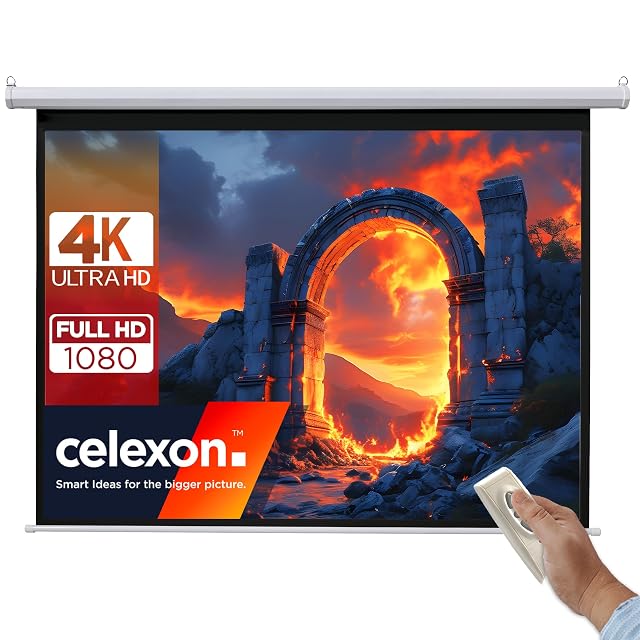
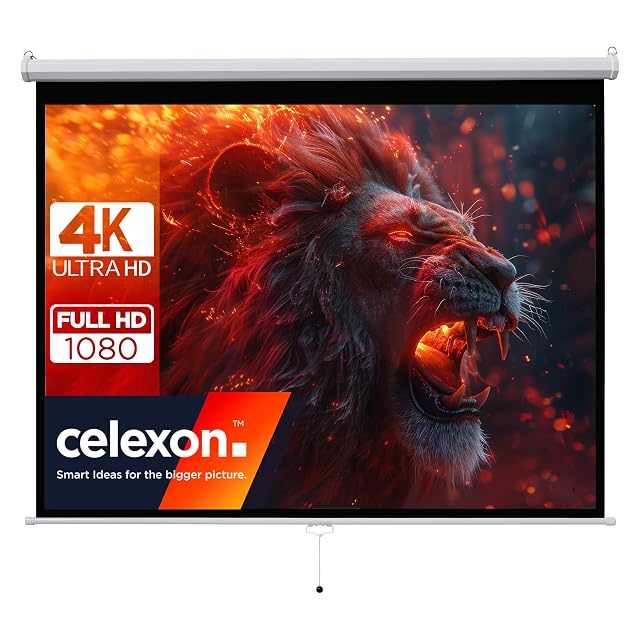
celexon Basic motorised screen, 120 inch, 4:3 vs celexon Basic pull-down screen, 100 inch, 4:3

Is a motorised projection screen worth it?

Same maker, same aspect ratio, two mechanisms. The motorised screen gives a 240 × 180 cm image at 120 inches and comes down at the press of a button; the pull-down gives 200 × 150 cm at 100 inches and comes down by hand. Neither publishes a gain figure, which is the specification that says how much light a screen returns — and its absence from both is the honest finding here. A motor is a convenience, and on a screen used every evening it is the difference between using it and not.

celexon Basic motorised projection screen, 4:3

celexon Basic motorised screen, 120 inch, 4:3

Wins 2 of 5

Check price

≈ 135 €

celexon Basic pull-down projection screen

celexon Basic pull-down screen, 100 inch, 4:3

Wins 1 of 5

Check price

≈ 95 €

Line by line

Compared on Basic motorised screen, 120 inch, 4:3 Basic pull-down screen, 100 inch, 4:3
Image size 240 × 180 cm, 120 inch diagonal — stated 200 × 150 cm, 100 inch diagonal — stated
Format 4:3 — stated 4:3 — stated
Mechanism Motorised — stated Manual pull-down — stated
Gain Not published in this listing Not published in this listing
Installation Needs a power supply at the mounting point Needs no power at all

A tick marks the better answer on that line only. Counting ticks does not decide the page — the two verdicts below do, because these products answer different questions.

Which one, for whom

Buy the celexon Basic motorised screen, 120 inch, 4:3

Buy the motorised screen if it will be used often. Twenty more inches of diagonal and a button rather than a cord are what stops a screen staying rolled up.

Buy the celexon Basic pull-down screen, 100 inch, 4:3

Buy the pull-down if there is no socket near the ceiling. It needs no power, it costs far less, and the picture on the fabric is the same question on both.

Questions people actually ask

What is screen gain and why does neither state it?

Gain is how much light a screen returns towards the viewer compared with a reference white surface — 1.0 is neutral, higher is brighter but narrows the useful viewing angle. Neither of these listings publishes it, which is common at this price and means the comparison has to rest on size and mechanism instead.

Is 4:3 the right format for films?

Films are wider than 4:3, so a widescreen image on a 4:3 screen leaves unused fabric above and below. A 16:9 screen suits film better. A 4:3 screen suits a room that also shows presentations, and it gives more usable height for a given width.

The full reviews