Skip to content

Earbay KS-TV966CD review

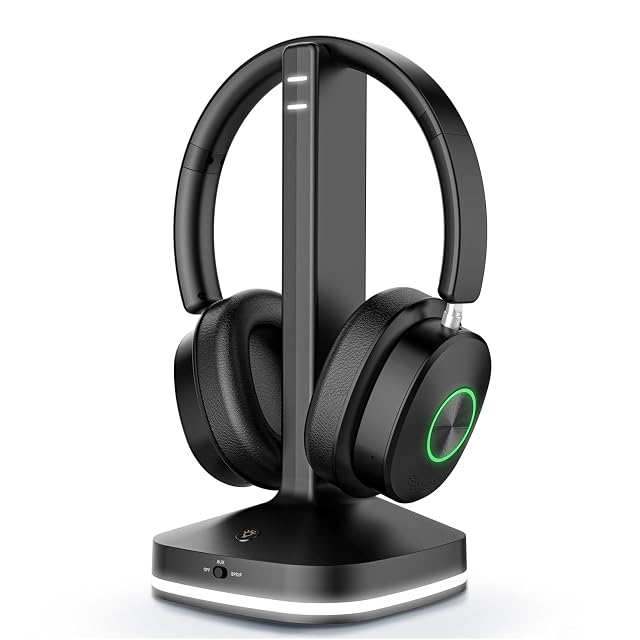
Bluetooth 5.4 TV headphones under 40 ms latency with a charging dock and all three cables.

The closing call Fifty-three dollars with optical, AUX and RCA cables all supplied and latency under forty milliseconds — which is the number that decides whether lips and dialogue stay together. Its title says forty-five hours and its bullet says forty.

What the maker puts in writing

  • “Powered by Bluetooth 5.4, these tv headphones wireless keep audio and on-screen action in near-perfect sync with latency under 40 ms. The strong signal travels up to 30 meters (98 ft) (100 feet)”
  • “Enjoy up to 40 hours of use per full charge… The smart charging base keeps your wireless headphones for tv neatly stored when not in use and begins powering them automatically the moment you set them back on the transmitter”
  • “These tv headphones wireless for senior deliver rich, full-bodied sound, crisp amplified dialogue, and easy volume controls—ideal for older listeners or anyone with mild hearing loss”
  • “Soft protein leather earpads and memory foam that gently conform to your ears, creating an ergonomic, pressure-free fit”
  • “Connect quickly with the included optical, AUX, or RCA cables, or pair via Bluetooth if your TV supports it”
  • Title: “45H Play Time”

Three cables in the box, which is what makes it universal

The included optical, AUX, or RCA cables.

That is the practical strength of this listing, and it solves the problem that defeats the most expensive headphones on this shelf.

Televisions have changed what they offer. Older sets have a headphone jack and RCA outputs; newer ones have optical and HDMI ARC and frequently neither of the analog two.

Which is why the Sony RF400 at $138 carries this in its own description: “This product was designed for older televisions with Stereo Audio connectors or a headphone jack: newer televisions with HDMI or Digital Optical should instead use headphone model WH-L600.”

Three cables mean you do not have to work out which era your television belongs to.

And Bluetooth pairing directly, “if your TV supports it”, is the fourth route — though many televisions pair poorly or with high latency, so the cabled transmitter is the one to rely on.

Under forty milliseconds, and why it is stated so insistently

Forty milliseconds is roughly where the eye notices that a voice does not match a mouth.

Ordinary Bluetooth is far worse. A standard A2DP connection using the SBC codec typically runs 150 to 250 milliseconds — on a face talking to camera, that is unwatchable.

So a product sold for television has to solve latency specifically, with a low-latency codec or a proprietary link.

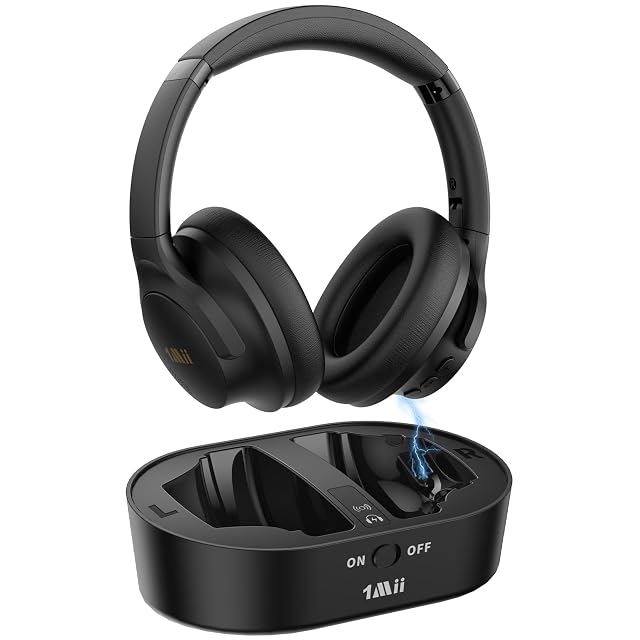
Five products here publish the threshold: these three Earbay listings, the 1Mii at $89.99 and the Holdsound at $79.39.

And it is worth noting what the silent ones are. The three Sony RF400 listings publish no latency figure, and they have the least of anything here — an analog RF link has no buffer to fill, so there is essentially nothing to delay. The three Sennheisers publish none either.

Forty hours, or forty-five

Title: 45H Play Time. Bullet: up to 40 hours.

Five hours apart on one product, with nothing to distinguish them — no condition, no volume level, no mode. The bullet is the more cautious and the likelier.

What matters more is the charging base: “begins powering them automatically the moment you set them back on the transmitter.”

A dock that charges on contact is why battery figures on television headphones matter less than they appear — you put them down between sessions and they are always full. Both other Earbay listings, the Holdsound and the 1Mii use the same arrangement.

For context on the shelf: 1Mii 75 hours · Earbay and Holdsound 40 · Sony and Sennheiser RS 120-W 20 · Sennheiser RS 175 and RS 195 publish none.

Protein leather and memory foam, which is the right pairing

Soft protein leather earpads and memory foam.

Two materials doing two jobs. Protein leather is a synthetic that is softer and more breathable than ordinary PU and does not crack the way vinyl does. Memory foam conforms to the shape of the head over a few minutes, which spreads clamping pressure instead of concentrating it.

On a product whose use case is a three-hour film, that matters more than a driver specification. The Holdsound, the 1Mii and Earbay’s other listings all publish the same combination.

Three Earbay listings, one model

The reference numbers tell the story — all three contain 966:

KS-TV966CD-HJ-0916 — this, $52.99 KS-TV-966H2-CD-HJ-0710 — $52.99 JLS-TV966CD-B-NEW-3 — $59.99

All three publish Bluetooth 5.4, under 40 ms, 30 m (98 ft) / 100 ft, 40 hours, a smart charging base, protein leather with memory foam, and optical, AUX and RCA cables.

The two at $52.99 are the same five points reordered and reworded. The one at $59.99 adds “3 Audio Modes” to its title and describes them in no bullet.

So: the same headphones, and seven dollars for three unnamed sound modes.

What is not published

No weight, where the Holdsound publishes 250 g, the Earbay at $59.99 255 g, the Sony 277 g and the Sennheiser RS 175 310 g. On headphones worn for hours, weight is the comfort figure.

No driver size, where the Sony RF400 publishes a 1.57 inch unit.

No frequency response, and no signal-to-noise figure — the Sennheiser RS 195 at $264.03 is the only product on this shelf publishing a measurement at all: “Analog input: typ. 85 dBA, Digital input: > 90 dBA”.

No sound modes, which the maker’s own $59.99 listing claims and the Sennheiser RS 120-W at $159.95 publishes properly as “Speech, Music, Neutral”.

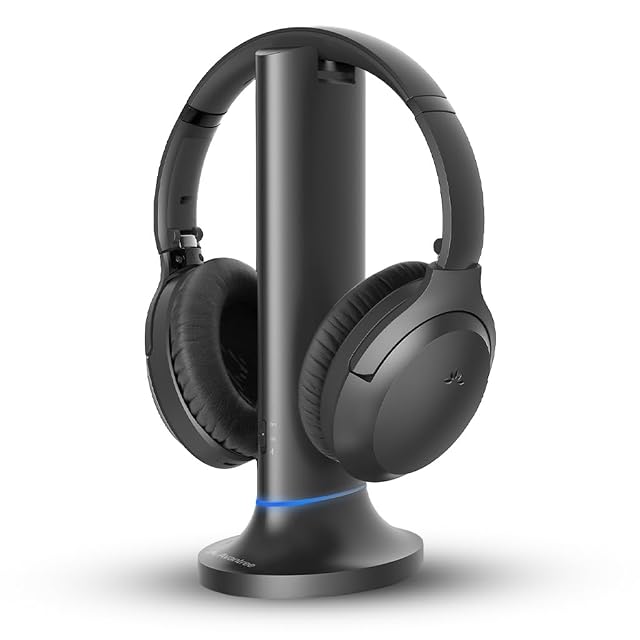
No volume limit. On a product sold for “mild hearing loss” with “amplified dialogue”, a maximum output figure would matter — and the Avantree at $159.99 is the only listing here that addresses the subject at all, by stating what it is not suitable for.

And the battery is sealed. Only the Sennheiser RS 120-W uses replaceable cells — “rechargeable AAA batteries”, named in its parts list as “1.2 V (AAA), NiMH”. When a sealed cell dies after a few years, the headphones are finished.

Availability

At the check, the American Amazon store stood at roughly $53.

These numbers are what Keepa carried on the day this page was last built. Stock and prices move without notice.

Prices quoted in this text were read on 4 October 2026. The live price is at the top of the page.
In its favor, and against it

Strengths

  • All three cables in the box — optical, AUX and RCA — so it connects to any television
  • Latency under forty milliseconds, which is the threshold where lip-sync error becomes visible
  • A charging base that starts charging as soon as the headphones are set down

Compromises

  • Its title says 45 hours and its bullet says 40, on the same product
  • No weight, no driver size and no frequency response published
  • Thirty meters of range, where the Sennheiser RS 120-W publishes sixty

Specifications

LatencyUnder 40 ms — see the FAQ on why that figure matters
WirelessBluetooth 5.4
RangeUp to 30 m (100 ft)
BatteryUp to 40 hours per charge — the TITLE says 45, see the FAQ
ChargingA smart base that begins charging the moment the headphones are set on it
Cables includedOptical, AUX and RCA — all three
EarpadsSoft protein leather with memory foam
Bluetooth pairingAlso possible directly, if the TV supports it
Stated useSeniors and anyone with mild hearing loss, with amplified dialogue
WeightNot published
Driver sizeNot published
Sound modesNot published, where the maker’s own $59.99 listing claims three
Frequency responseNot published
Volume limitNot published
ReferenceKS-TV966CD-HJ-0916 — see the FAQ on the three Earbay listings
Amazon referenceB0HJYS3CYV
EAN0749442474078

What gets asked most

Why is forty milliseconds the number that matters?

Because that is roughly where the eye starts to notice that the voice does not match the mouth. The bullet publishes "latency under 40 ms", and five products on this shelf publish the same threshold — these three Earbay listings, the 1Mii at $89.99 and the Holdsound at $79.39. The reason it is stated so insistently is that ordinary Bluetooth is far worse: a standard A2DP connection using the SBC codec typically runs 150 to 250 milliseconds, which on a face talking to camera is unwatchable. So a product sold for television has to solve latency specifically, through a low-latency codec or a proprietary link. Worth noting what the silent products here are: the three Sony RF400 listings publish no latency figure, and they are the ones with the least — an analog RF link has no buffer to fill, so there is essentially nothing to delay.

Is it forty hours or forty-five?

The listing says both, and the difference is in the same document. The title claims "45H Play Time"; the battery bullet says "Enjoy up to 40 hours of use per full charge". Five hours apart on one product, and nothing distinguishes the two figures — no condition, no volume level, no mode. The bullet is the more cautious of the two and the likelier. What matters more in practice is the charging base, which the same bullet describes: "the smart charging base... begins powering them automatically the moment you set them back on the transmitter." A dock that charges on contact is why battery life on a television headphone matters less than it first appears — you put them down between sessions and they are always full. Both of Earbay’s other listings here, and the Holdsound and 1Mii, use the same arrangement.

How does it differ from the other two Earbay listings?

Barely, and the reference numbers give it away: all three contain 966 — KS-TV966CD-HJ-0916 here, KS-TV-966H2-CD-HJ-0710 on the other $52.99 listing, and JLS-TV966CD-B-NEW-3 on the $59.99 one. All three publish the same core figures: Bluetooth 5.4, under 40 ms, 30 meters (98 ft) / 100 feet, 40 hours, a smart charging base, protein leather earpads with memory foam, and optical, AUX and RCA cables included. The two at $52.99 carry the same five points in a different order with slightly reworded text; this one adds the disputed 45H claim to its title. The one at $59.99 adds "3 Audio Modes" to its title — and describes them in no bullet. So the practical answer: these are the same headphones, and the seven dollars buys three unspecified sound modes.

Against the home cinema devices in the same bracket

Between home cinema devices of the same category and nearby price. Shown: what they all state. A half-filled column says nothing.

Model Price LatencyRangeBatteryWeight
Earbay KS-TV966CD $53 Under 40 ms — see the FAQ on why that figure mattersUp to 30 m (100 ft)Up to 40 hours per charge — the TITLE says 45, see the FAQNot published
Earbay KS-TV-966H2-CD $53 Under 40 msUp to 30 m (100 ft)Up to 40 hours per charge — and the title does not contradict itNot published
Earbay JLS-TV966CD $60 Below 40 msUp to 30 m (100 ft)Up to 40 hours per charge255 g (9 oz) — the only Earbay listing here that publishes one
1Mii ClearLinkTV H3 $90 Less than 40 ms, on an ultra low latency 2.4 GHz linkUp to 100 ftUp to 75 hours of playtime — the longest on this shelf by 35 hoursNot published

What the models do not share, in home cinema devices

  • If price decides: this model, at $53.
  • Highest Battery in the table: 1Mii ClearLinkTV H3 (Up to 75 hours of playtime — the longest on this shelf by 35 hours).

Who should pick this one, among home cinema devices

A television of any age — the three cables cover every connection on this shelf

What buyers actually choose

Amazon reports what buyers took in the month before this page was last checked: at least 50.

The figure is a floor, rounded by Amazon, and read through Keepa — it says what buyers picked, not what a maker claims.

Sources

Specifications: the manufacturer sheet for home cinema gear and the matching Amazon product page. Prices and availability: Keepa. Every figure on this page names its source.

The method applied to these home cinema devices