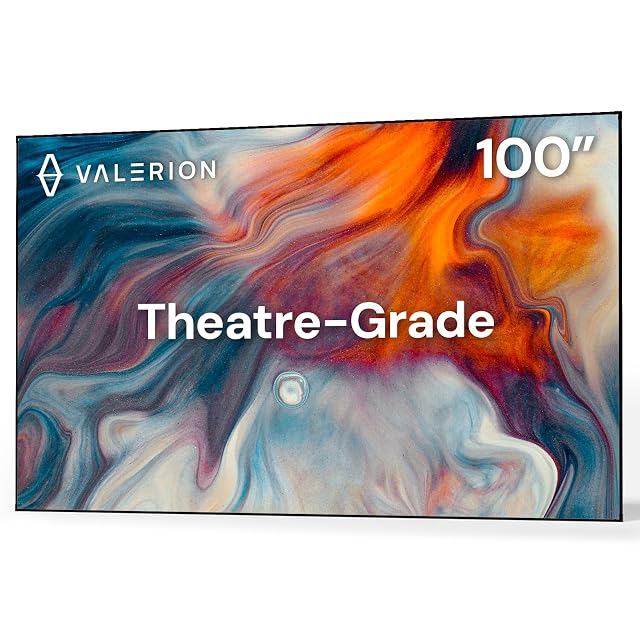
The bottom line The same construction as any fixed frame, with the one measurement most listings leave you to calculate — and the same missing fabric specifications as the rest of the shelf.
The number that stops a return
Total width, 212 cm. Not the image, the whole object. A fixed frame adds to each side of the picture, and a listing that quotes a diagonal alone leaves the buyer to guess how much. Measuring the wall and comparing it with a stated total is a two-minute job that only works if the total is published.
What the construction gives you
Permanent flatness and a black border, as with any fixed frame. Those two things are the reason this construction exists and they do not vary much between makers at this price.
What the listing does not say
Gain and backing. This shelf publishes both rarely, and this page records their absence rather than assuming a neutral 1.0 — a fabric can be brighter on axis and narrower in viewing angle without saying so.
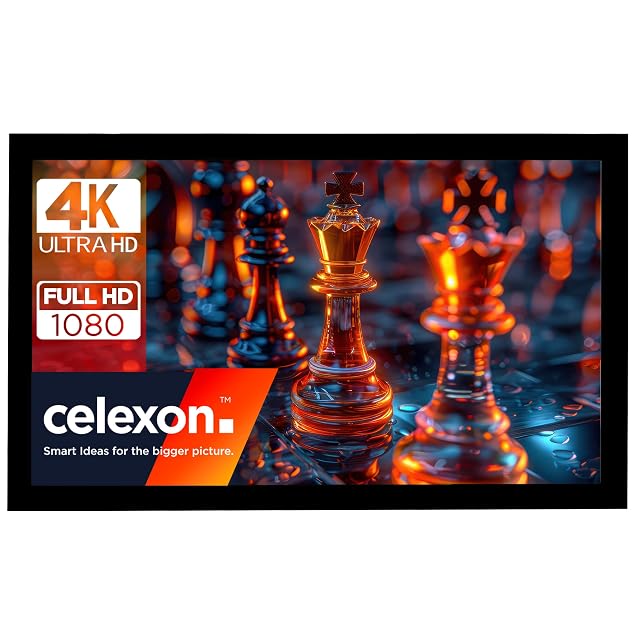
Choosing between this and the celexon
They are the same idea at the same price. The ESMART states total width; the celexon states image dimensions and a diagonal. Which is more useful depends on whether your constraint is the wall or the seating.
What to add
Nothing. A fixed frame is finished when it is on the wall — which is its other quiet advantage over the mechanisms that need a trigger, a remote or a place to retract into.
Availability
On sale from 160 € to 190 € on the German, French and Italian Amazon stores at the time of checking.
Listed but with no offer on the British and Spanish Amazon stores — the reference exists there and nobody is currently selling it.
Not found on the American Amazon store, where the buy link falls back to a local search rather than to a page that does not exist.
Prices and availability are what Keepa reported on the date this page was updated; both move.
Prices quoted in this text were read on 4 September 2026. The live price is at the top of the page.
What we like, and what we don't
Strengths
States TOTAL width, which is the figure that decides whether the screen fits the wall
A fixed frame, so permanently flat with a black border
A model code that identifies the mechanism, which makes the range easy to compare within itself
Compromises
No gain figure published
No black backing stated
White fabric, which is the right default in a dark room and the wrong one where ambient light cannot be controlled
Specifications
Total width
212 cm — stated as total, not image width
Fabric
White — stated
Construction
Fixed frame — stated
Gain
Not published in this listing
Backing
Not published in this listing
Amazon reference
B074PWC9BZ (same reference on 5 Amazon marketplaces)
EAN
4260201939097
Questions people actually ask
Why is total width more useful than image width?
Because the screen has to physically fit. A frame adds several centimetres to each side of the image, and a listing that quotes only a diagonal leaves you to work out the rest. Where a maker publishes the total, it has answered the question that causes returns.
Is white the right fabric?
In a room where the light can be controlled, yes: it is neutral and returns light evenly. In a bright room a grey or ambient-light-rejecting surface lowers the black level more than it lowers perceived white, and that is a net gain.
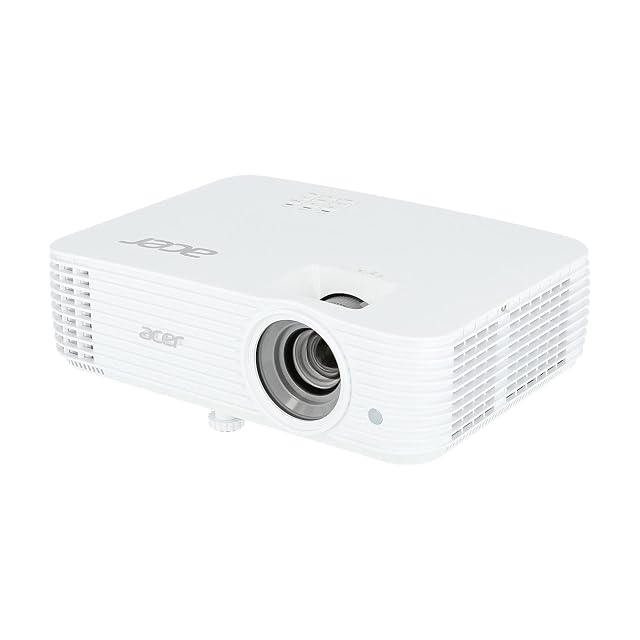
A 4K UHD DLP projector that states its brightness in ANSI lumens at a price where most of the shelf stops doing so — and a specification sheet that reads like a data table rather than a sales page.
Best for: A first 4K projector in a room where the light can be controlled and the machine can sit where the throw ratio wants it.