The bottom line The right idea for a bright room in the right mechanism for a living one — and the listing leaves out the geometry question that decides whether it works.
What a high-contrast surface does
It absorbs part of the light arriving from directions other than the projector’s. Ambient light lands on a screen and becomes the black level of the image, so a surface that absorbs it lowers the black more than it lowers perceived white. In a bright room that is a net gain; in a dark one it is simply a dimmer picture.
The combination that makes it unusual
High-contrast surfaces are normally fixed frames, because the optical structure prefers a rigid, flat surface. Putting one on a motorised roller means a specialist surface in a room that also has to be a living room — which is a real and uncommon proposition.
The question the listing does not answer
Which throw geometry it is designed for. An ALR surface is directional by construction. Matched to the wrong projector position, it rejects exactly the light you are trying to see. This is the first thing to establish, and it is not in the listing.
What is also missing
A gain figure. On this kind of surface, gain and viewing angle are the specification, and neither is published here.
Where the money goes
Into the fabric. The mechanism is the same as a much cheaper motorised screen; what costs is the optical structure of the surface, and it is worth it only in a room that needs it.
Availability
On sale at around 1549 € on the German and French Amazon stores at the time of checking.
Listed but with no offer on the British Amazon store — the reference exists there and nobody is currently selling it.
Not found on the American, Italian and Spanish Amazon stores, where the buy link falls back to a local search rather than to a page that does not exist.
Prices and availability are what Keepa reported on the date this page was updated; both move.
Prices quoted in this text were read on 4 September 2026. The live price is at the top of the page.
What we like, and what we don't
Strengths
A high-contrast surface that lowers the black level in a room with ambient light
Motorised, so a specialist surface does not have to occupy the wall permanently
16:9 at a genuinely usable 221 cm of image width
Compromises
No gain figure published, on a surface where gain is the central specification
The throw geometry it is designed for is not stated — an ALR surface must match where the projector sits
The most expensive screen in this catalogue by a wide margin
Specifications
Surface
DARKVISION high contrast — stated
Image size
221 × 124 cm, 100 inch — stated
Format
16:9 — stated
Mechanism
Motorised — stated
Gain
Not published in this listing
Amazon reference
B0H8Q1FG54 (same reference on 3 Amazon marketplaces)
EAN
4260094746277
Questions people actually ask
Which projector position does it suit?
The listing does not state it, and on an ambient-light-rejecting surface that is the specification that decides everything. A screen built to reject light from above suits an ultra short throw machine; one built to reject light from the sides suits a ceiling-mounted projector. Establish it before buying.
Is a high-contrast screen worth it in a dark room?
No. In a room where light can be controlled it costs brightness and viewing angle and gains nothing — a neutral white surface is the better answer. These surfaces exist for rooms that cannot be darkened.
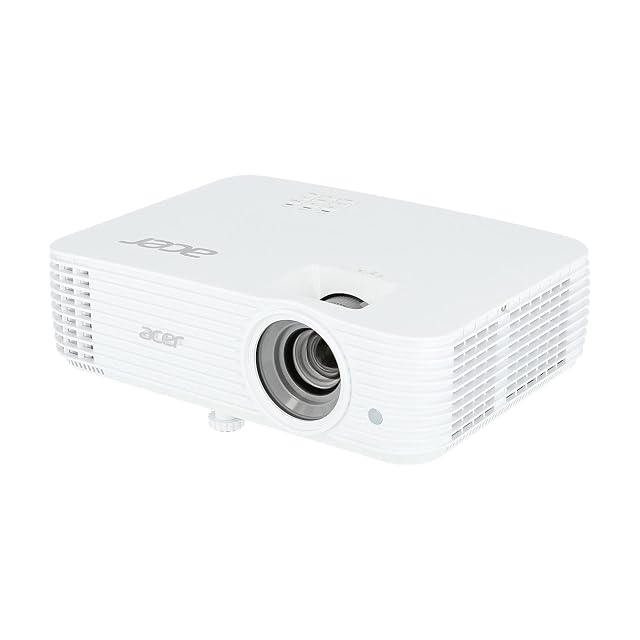
A 4K UHD DLP projector that states its brightness in ANSI lumens at a price where most of the shelf stops doing so — and a specification sheet that reads like a data table rather than a sales page.
Best for: A first 4K projector in a room where the light can be controlled and the machine can sit where the throw ratio wants it.
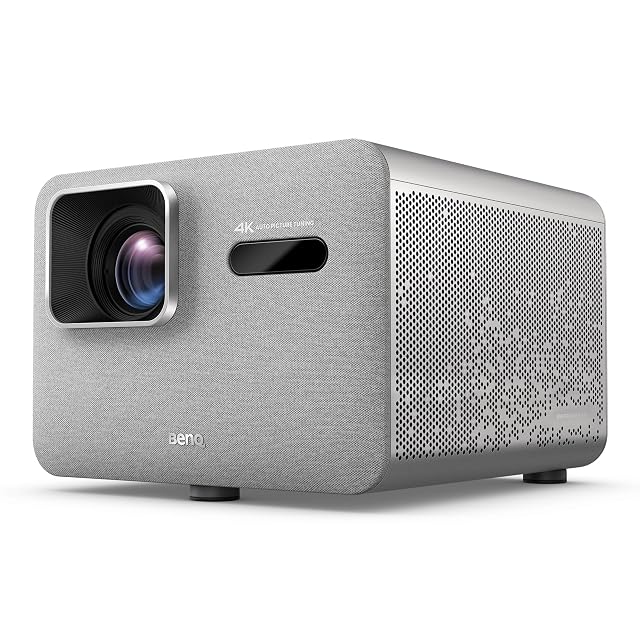
A 4K HDR projector with Google TV on board and a stated 3 000 ANSI lumens — the built-in system is the reason to choose it, and the reason to check licensing before buying.
Best for: Someone who wants one object rather than a projector plus a streaming stick, in a room where the light can be controlled.
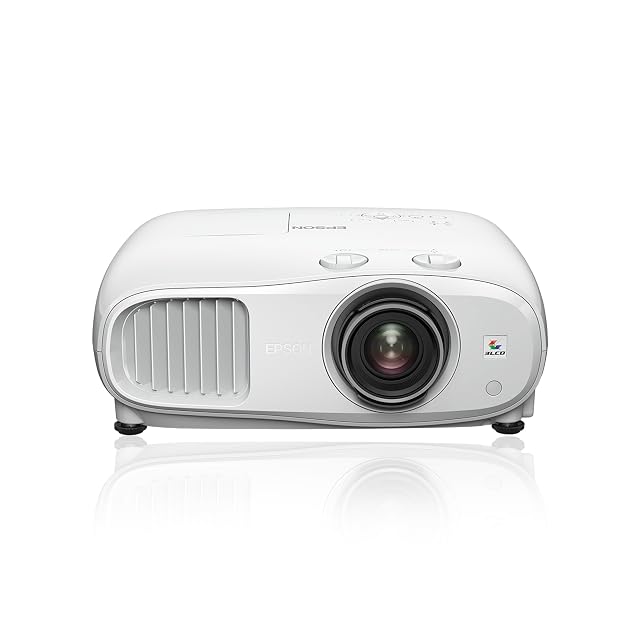
4K PRO-UHD · 3 000 lumens white AND colour brightness · 40 000:1 stated contrast · 3LCD · optional Wi-Fi
A 3LCD projector that publishes white and colour brightness as the same figure — a distinction single-chip machines rarely make, and one that decides how a saturated image actually looks.
Best for: A viewer who notices colour rather than pixel count, and anyone bothered by the rainbow effect single-chip projectors can produce.