The bottom line A horn-loaded height module that publishes its dispersion — the right figure for the job — and not the sensitivity that is the brand's usual argument.
The figure that suits the job
90° × 90° dispersion. For an up-firing speaker, the pattern decides which part of the ceiling reflects and therefore where the height information appears to come from. It is a more relevant specification for this product than frequency response would be, and almost nobody publishes it.
Horn loading, and why it matters here
Klipsch uses horns throughout its range, and horns are efficient: more output for a given amplifier power. Height channels are driven by a receiver’s last and least generous amplifiers, so efficiency is worth more in this position than in almost any other.
What is missing
The sensitivity figure. It is the number that would quantify the paragraph above, and it is Klipsch’s central technical argument elsewhere. Its absence from this listing is a real omission.
The ceiling condition
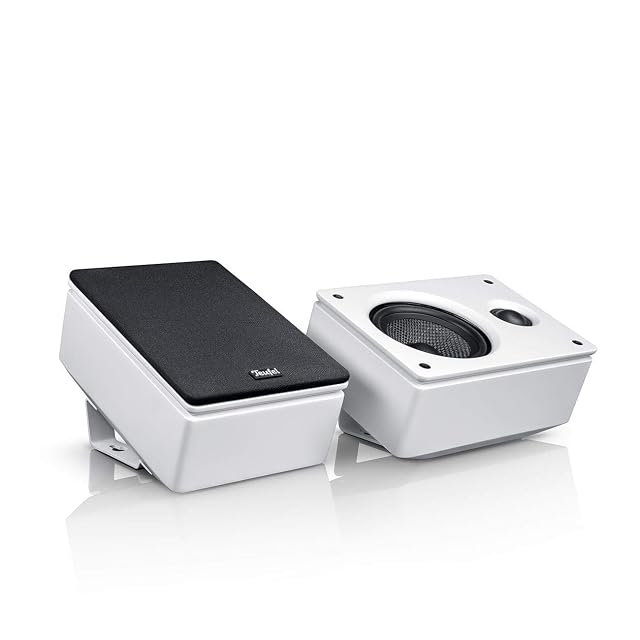
Flat, hard, horizontal. Under a sloped or absorbent ceiling this speaker has nothing to reflect from, and unlike the Teufel it cannot be repurposed as a rear channel.
Where it belongs
On top of Klipsch floorstanders, in a Klipsch system, in a room with an ordinary ceiling. Inside those three conditions it is the right module; outside any of them, it is not.
Availability
On sale from 289 € to 397 € on the German, American, British, French, Italian and Spanish Amazon stores at the time of checking.
The French and Italian Amazon listings are priced above 1.6× the cheapest store, which is normally a reshipping offer rather than a local price; they are left out of the range above.
Prices and availability are what Keepa reported on the date this page was updated; both move.
Prices quoted in this text were read on 4 September 2026. The live price is at the top of the page.
What we like, and what we don't
Strengths
Publishes a dispersion pattern — 90° × 90° — which is the specification that decides where a reflection goes
Horn loading, which Klipsch uses throughout its range and which generally means high sensitivity
Designed to sit on top of Klipsch floorstanders from the same range
Compromises
No sensitivity figure in this listing, on a brand whose sensitivity is its main technical argument
Requires a flat, hard ceiling — the same condition as every up-firing module
Only works as a height module, unlike the Teufel which also serves as a rear
Uses technology from the Reference Premiere range — stated
Type
Sold as a pair — stated
Sensitivity
Not stated in this listing, though Klipsch designs are typically high
Amazon reference
B09PPKX16G (same reference on 6 Amazon marketplaces)
EAN
0743878046366
Questions people actually ask
What does 90° × 90° dispersion mean?
The horn directs sound into a square-ish cone 90 degrees wide in both planes. On an up-firing speaker that determines the size and position of the ceiling patch the sound reflects from, which in turn decides where the height effect appears to come from.
Why do Klipsch speakers use horns?
Horn loading raises efficiency: the speaker plays louder for a given amplifier power. In a height channel driven by a receiver's last amplifiers, that is a practical advantage rather than a philosophical one.
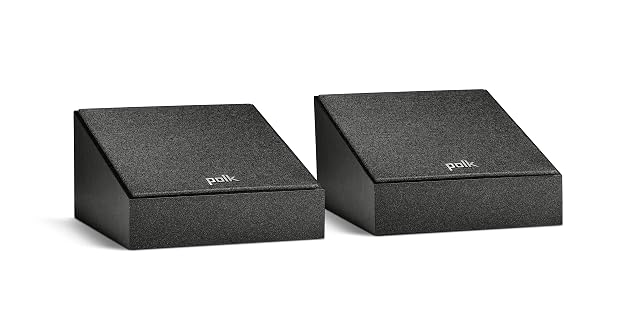
Pair · Dolby Atmos certified height speaker · designed for XT20, XT60 and XT70 · wall, shelf or on-speaker mounting
A height module named for the exact speakers it sits on — XT20, XT60, XT70 — which is what makes a matched Atmos layout possible rather than approximate.
Best for: A Polk Monitor XT system: the front speakers, the centre and these, all from one range.
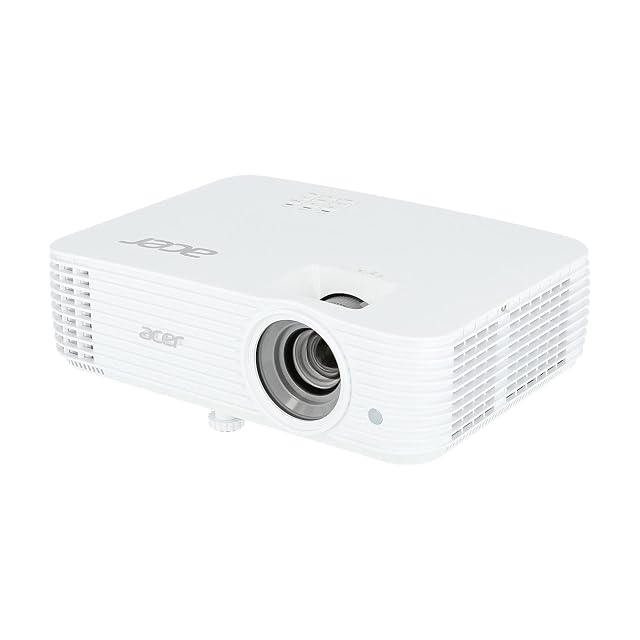
A 4K UHD DLP projector that states its brightness in ANSI lumens at a price where most of the shelf stops doing so — and a specification sheet that reads like a data table rather than a sales page.
Best for: A first 4K projector in a room where the light can be controlled and the machine can sit where the throw ratio wants it.